Showing posts with label FILM REGULATION. Show all posts

Wednesday, 30 March 2011

History of the BBFC: 1980s


The decade started in dramatic fashion for the BBFC with the submission of Tinto Brass' Caligula. The film achieved notoreity in the USA and arrived in the UK with the reputation of being 'the most controversial film of the eighties'. All sexually explicit material was removed in order to conform with Customs regulations (specifically the Customs Act 1876), and further cuts made to material which was potentially actionable under the Obscene Publications Act - the later including sexually violent material. The cut film was then viewed again by the Board, who had already indicated that further cuts to sex and violence would be necessary in order to secure a nation-wide release under BBFC 'X' category standards.   


Throughout the decade there were a number of films involving gangland characters.  1981 saw the release of Tom Clegg's McVicar, a criminal biopic passed 'X'; and John Mackenzie's The Long Good Friday, the story of a criminal determined to preserve his manor against incursions by the IRA, also passed 'X'.  This has remained '18' on video since 1987, with the most recent classification in 2008. Neil Jordan's Mona Lisa, was passed '18' in 1986, with Bob Hoskins playing the role of chauffeur to a prostitute.  David Green's Buster, passed '15' in 1988, told the story of Great Train Robber 'Buster' Edwards on the run from the law.  The decade concluded with Peter Medak's tale of infamous twin gangland figures, The Krays, passed '18', after cuts to an horrific mutilation scene.

Another film based on real-life was Michael Caton-Jones' Scandal, an account of the Profumo affair, a political scandal of the 1960s.  Although for some the events were considered too recent for comfort, the problem for the BBFC was of a different kind.  An orgy scene revealed the presence of an erect penis in the backgound of the shot.  The image was obscured by soft-focus lighting and the film released with an '18' certificate.

The first of the Rambo series, First Blood (Ted Kotcheff), was passed '15' uncut in 1982, and the second, George Pan Cosmatos' Rambo - First Blood Part II was passed '15' uncut in 1985.  However, Rambo III was cut in 1988 to obtain an '18' certificate.  In addition to a horse-fall removed under the terms of the Cinematograph Films (Animals) Act 1937, the violence was reduced by the excision of spatter shots, and cuts were made to counteract the glamorisation of weapons which constituted a significant classification issue. 

John Milius' Conan The Barbarian required cuts to a sex scene between Conan and a serpent-woman, and to remove horse-falls, for an 'AA' category in 1982.  The second Conan film, Richard Fleischer's Conan The Destroyer also required horse-fall and animal cruelty cuts in 1984.

The decade also saw the establishment of the 'stalk and slash' genre with the Friday 13th series of films, with parts I and II passed 'X' uncut on film in 1980 and 1981 respectively. Part III was also passed 'X' uncut on film in 1982, but with two cuts to violence/horror to obtain an '18' on video in 1987.

1981 saw the second in the Halloween series passed 'X' uncut on film, but a scene where a woman was scalded to death in a jacuzzi was reduced for an '18' video release in 1990. 
The development of the video recorder created new anxieties about the home viewing of feature films. Legally, there was no requirement that videos should be classified, which meant that films that had not been approved by the BBFC or which were suitable for adults only, were falling into the hands of children. In particular the tabloid press led a campaign against so called 'video nasties'. This term was not always clearly defined, but there were 70 titles that had either been prosecuted by the DPP under the Obscene Publications Act, or were awaiting prosecution. Some of these were horror films that had never been submitted to the BBFC. Others had been cut for their cinema release, and the video versions sometimes included restored cuts. The outcome of this concern was new legislation, introduced as a private member’s Bill by Conservative MP, Graham Bright. The Video Recordings Act 1984, makes it an offence for a video work to be supplied if it has not been classified, or to supply a classified work to a person under the age specified in the certificate.
No record of the decade of the so-called 'video nasties' would be complete without mention of Sam Raimi's zombie film, The Evil Dead. This was submitted in 1982 and required 49 seconds of cuts to violence and horror.  The video was placed on the Director of Public Prosecution's (DPP) list and seized, with a number of retailers charged under the Obscene Publications Act - although the work was never tested in court as the retailers pleaded guilty.  In 1985 the distributor, Palace Video, was prosecuted and acquitted.  The film cuts were increased for the video version in 1990 as a precautionary measure against possible future prosecution, but in 2000 the full version was passed '18' on video.  
When former 'video nasties', they are examined under current Guidelines, and their legal history considered.  It is usually possible to make cuts to ensure a modern release, although many of them continue to test the Guidelines for sexual violence.

1982 - Review of the category system

  • 'A' was changed to 'PG'
  • 'AA' was changed to '15' and
  • X' became '18'.
A new category 'R18' was introduced which permitted more explicit sex films to be shown in members-only  clubs.  Previously, such clubs had shown material unclassified by the BBFC, but a change in the law closed this loophole.  Since the mid 1980s most 'R18' material is released on video, only available from a limited number of sex shops which must be specially licensed by local authorities.

Further changes to the category system in the 80s
In 1985: 'Uc' was introduced for video only, to identify works suitable for very young children to watch alone.


In 1989: '12' introduced on film, to bridge the huge gap between 'PG' and '15'. This was extended to video in 1994. The first film to be given a '12' rating was Batman

History of the BBFC: 1970s

1970 - CHANGES IN THE CATEGORY SYSTEM
During the sixties it was recognised that teenagers had specific concerns of their own which ought to be reflected in the category system.
  • Introduction of 'AA' : over 14 only
  • 'A' split to 5+ but warning to parents that material may not be suitable for under 14
  • Raising of 'X' from 16 to 18
The idea was that this would protect adolescents from material of a specifically adult nature and would permit more adult films to be passed uncut for an older, more mature audience.  It recognised the earlier maturity of many teenagers by giving them access to certain films at the age of 14, without being accompanied by an adult.  It also indicated to parents the difference between films wholly suitable for children of all ages, which would continue to be classified 'U', and those which, while not generally unsuitable, might contain some material which some parents might prefer their children not to see.


70s SEXUAL VIOLENCE AND OTHER CONTROVERSIES
The seventies did indeed see the release of a number of provocative films, in particular those that linked sex and violence, for example Straw Dogs (1971), and A Clockwork Orange (1971), both of which contained controversial rape scenes. There were a number of other controversies during the seventies, for example Ken Russell’s The Devils(1971), which was accused of blasphemy, Last Tango in Paris (1972), which was accused of being 'obscene' and The Exorcist (1973), which was accused of having a psychologically damaging effect on young people. In the case of each of these films, the decision of the BBFC to award an 'X' was overturned by a number of local authorities. Pressure groups such as The Festival of Light, and Lord Longford’s Committee on Pornography also placed immense pressure on the BBFC, in a backlash against what was perceived as liberalisation having gone too far. The Festival of Light mounted a campaign against alleged links between teenage suicide and screenings of The Exorcist.
 
Stephen Murphy, who became Secretary of the Board in July 1971, resigned in 1975 and was succeeded by James Ferman.  One of the first films Ferman looked at was The Texas Chain Saw Massacre, which his predecessor had already refused to classify shortly before his departure.  Ferman agreed with Murphy that the violence and terrorisation in the film (directed largely towards a woman over a sustained period) was unacceptable.  In an early interview, Ferman remarked that it wasn't the sex that worried him but the violence and, in particular sexual violence.  During his time at the BBFC, Ferman permitted increasingly explicit sexual material whilst clamping down on sadistic violence (especially when perpetrated by heros) and sexual violence (particularly where it seemed that the portrayal of rapes and assaults were intended as a 'turn on' to viewers).  


Ferman's attitudes and policies reflected a more general shift of public concern during the 1970s, away from arguments about the explicitness of screen representations towards a consideration of any possible corrupting influence. This has been understood more and more in terms of whether the viewer is encouraged to enjoy the pain of victims of violence, and, often, sexual violence.   Prior to 1977 the Obscene Publications Act did not apply to cinema films and films were judged on the basis of whether any individual scene might be considered 'indecent', regardless of context.  However, the extension of the OPA to films in 1977 gave the BBFC more latitude when considering depictions of sex in films since they now had to be considered 'as a whole'.  Therefore, the BBFC was able to waive, in 1978, a cut for sexual explicitness made in 1973 to Last Tango in Paris.  On the other hand, the OPA required that the Board consider whether a scene might deprave and corrupt its likely audience.  Therefore, in 1978, the BBFC demanded that an additional cut should be made to the sex film Emmanuelle, (originally passed 'X' in 1974) to remove a rape scene that, although not 'indecent', might deprave and corrupt viewers by suggesting that rape was erotic and could teach the victim a valuable 'lesson'. The film was finally passed '18' uncut in 2007 after further viewings, in accordance with our guidelines and sexual violence policy, determined that the film did not endorse the rape myth.
History of the BBFC: 1960s

Challenges to the Obscene Publications Act (1959), in cases such as the successful defence in 1960 of D. H. Lawrence’s novel Lady Chatterley’s Lover, suggested a strong shift in public opinion, when a jury acquitted this work. John Trevelyan, as Secretary to the Board, responded to the new spirit of liberalism by stating: "The British Board of Film Censors cannot assume responsibility for the guardianship of public morality." It cannot refuse for exhibition to adults films that show behaviour that contravenes the accepted moral code, and it does not demand that ‘the wicked’ should also be punished. It cannot legitimately refuse to pass films which criticise ‘the Establishment’ and films which express minority opinions".


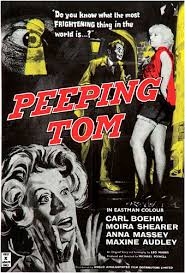
However, the decade began with a challenge in the form of Michael Powell's Peeping Tom, which had been seen by the Board at the script stage and provoked a remark from Trevelyan about its 'morbid concentration on fear'. Various cuts had been suggested at script stage, and the film was passed 'X' in 1960 with cuts. Critics greeted the film with a torrent of abuse and it failed to please the public, damaging Powell's reputation.


New realism took hold in British films, with the submission of a number of 'kitchen sink' dramas from the British New Wave directors - Karel Reisz's Saturday Night And Sunday Morning in 1960, Tony Richardson's The Loneliness of the Long Distance Runner in 1962, both passed 'X', the latter with cuts. Saturday Night... had been submitted to the Board at script stage. Concerns were expressed about the language, violence and the theme of abortion, and the script was modified to meet these concerns This might have been the 'swinging Sixties', but in spite of the film's BBFC uncut release at 'X', Warwickshire Council deemed it too strong and demanded that cuts be made for a local certificate. The film was passed 'PG' on video in 1990.


By 1966, Lewis Gilbert's Alfie was passed uncut, with the remark  that it contained a 'basically moral theme' in spite of some misgivings at the Board about the abortion theme. Attitiudes to sexuality were on the change in the wake of the 1957 Wolfenden Report which recommended a relaxation of the laws concerning homosexuality, although no new legislation was to appear for another ten years. Trevelyan claimed that the BBFC had never banned the subject of homosexuality from the screen but 'the subject was one that would probably not be acceptable to the British audience'. Basil Dearden's Victim contributed to the debate in 1961, containing the line 'they call the law against homosexuality the blackmailer's charter'. The film was passed 'X' with a brief cut. When the film version was submitted for a modern classification in 2005, it was passed 'PG'.


As public tolerance increased in the sweeping social change of the sixties, films became more explicit, but in practice the Board still requested cuts, usually to verbal and visual 'indecency'. Ingmar Bergman's 1964 The Silence created a stir because of its treatment of sexual matters . After extensive consultation with the distributor and the director, Trevelyan passed the film 'X' with 35 seconds of cuts to sex scenes. The decade also saw the establishment of the Carry On.. series, characterised by its use of seaside postcard humour, some of which was trimmed for the 'A' category -for instance in Carry On Cleo (1964) and Carry On Camping (1969).
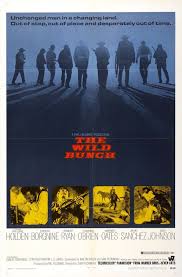

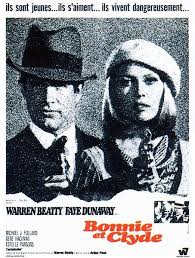
Violence in Walter Grauman's Lady In A Cage proved too strong for the Board in 1964 and the film was rejected on the grounds that it could 'invite and stimulate juvenile violence and anti-social behaviour by young people'. The Greater London Council granted a cut version of the film an 'X' certificate. After However, there was no holding back the inevitable, and in 1967 Arthur Penn's Bonnie and Clyde, with its notorious denouement of the charismatic outlaws being riddled with bullets, was passed 'X' uncut in 1967. By the end of the decade in 1969 Sam Pekinpah's classic Western The Wild Bunch pushed levels of violence still further in spite of some ten seconds of cuts for 'X'.

One of the most commercially successful series of films of the decade began in 1962 with Terence Young's Dr No (James Bond), the first of the long running James Bond movies. Passed 'A' with cuts, this set a pattern for what followed, with From Russia With Love passed 'A' with cuts to sexual innuendo in 1963, Goldfinger passed 'A' in 1964 with cuts to nudity and violence, and Thunderball passed 'A' in 1965 with a cut to a sexy massage scene.


In 1968 Lindsay Anderson's controversial If..., a metaphorical look at British society through the microcosm of a boys' public school, proved to be a box-office success. Only one cut was made, not to violence but to male nudity. In the decade of tuning in, turning on, and dropping out, The Trip fell foul of BBFC concerns about drugs and was rejected in 1967. This Roger Corman work about the delights and drawbacks of taking LSD was not classified until 35 years had elapsed and it was no longer considered a danger. It was for years the Board's stance that the film presented LSD use as normal and legitimate, rather than as a dangerous and criminal, practice. It was finally passed '18' on video in 2002 under Guidelines that allowed for a balanced and realistic depiction of class A drugs use at the adult category,

Tuesday, 29 March 2011

History of the BBFC: 1950s

The Fifties saw the end of rationing and a gradual increase in prosperity for those who, as Prime Minister MacMillan stated, “have never had it so good”. One development that stemmed from this apparent affluence was the emergence of 'youth' as a group with a defined identity and as a target for consumer goods, as young people with disposable income became an attractive proposition for those selling records, clothes and all the trappings of the teenager.

Controversial subjects on film were accommodated in the UK under the new 'X' category, introduced in 1951and incorporating the former advisory 'H' category given to horror films. As the growth of television ownership eroded the adult/family cinema audience, films like Rock Around The Clock(1956) drew teenage audiences. Cut for U, this film caused rioting in cinemas and fuelled increasing concern about teenage criminality, although there was in fact no evidence of a teenage crime wave as suggested by the popular Press.


The new 'X' category, which excluded children under 16, was sufficient to contain the cynical La Ronde, Max Ophuls' 1951 film about a chain of sexual encounters. Records suggest that the film was cut, unsurprising in an era when the Board was disinclined to relinquish its role as protector of public morals, to the extent that even in 1956 dialogue cuts were made to Ingmar Bergman's Smiles of a Summer Night because the sex references were considered too risqué.

Concerns about what were then known as juvenile delinquents delayed the classification of Laslo Benedek's 1954 film, The Wild One, for thirteen years because the Board described the contents as 'a spectacle of unbridled hooliganism'. Repeated attempts were made to secure a classification, and eventually some local authorities overturned the Board's rejection, allowing local releases. The riots in English seaside towns involving Mods and Rockers (1964) were cited as providing justification for the Board's continuing objections to the film. The Board maintained its stance until 1967, when the dangers associated with the film's release were judged to be over.

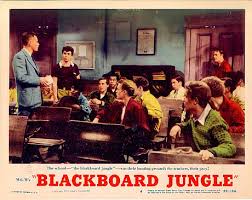
Nicholas Ray's 1955 Rebel Without A Cause also ran into trouble because of its depiction of what the Board considered to be anti-social behaviour and teen violence, but substantial cuts were agreed for the film's release at 'X'. In the same year, Richard Brook's The Blackboard Jungle was submitted. The first reaction of the BBFC 's Secretary, Arthur Watkins, was to reject it, on the grounds that 'filled as it is with scenes of unbridled revolting hooliganism (it) would, if shown in this country, provoke the strongest criticism from parents...and would have the most damaging and harmful effect on...young people'. The film was withdrawn from the Venice Film Festival after pressure from the US ambassador to Italy, who felt that it presented an unflattering impression of American schools. The rejection decision was challenged by MGM, the distributor, and the film was viewed again by the Board President which resulted in another rejection, although the artistic merits of the film were acknowledged and cuts were considered. A series of negotiations then began, resulting in substantial cuts for an 'X' certificate.

1955 also saw the rejection of a very different film, The Garden of Eden, about a mother and daughter who decide to become nudists. The film only showed bare breasts and buttocks, but the film was regarded as unacceptable, the BBFC having had a long-standing policy against screen nudity, partly on the grounds that if they encouraged more nudity on screen, they would be inviting sexual exploitation. However, a large number of local authorities saw fit to overturn the BBFC decision, to the extent that in 1958, the Board was obliged to classify the film at 'A'.

The topic of drugs exercised the BBFC to a considerable degree during the decade. Devil's Weed was rejected in 1951, because the Board felt that the moral lessons about the evils of drugs use were not made sufficiently clear. In 1954, however, the Board passed L'Esclave, another film dealing with the subject of drugs, albeit with cuts.

1955 saw the submission of Otto Preminger's The Man With The Golden Arm, a story about a recovering drug addict who is lured back into his habit. The Home Office had made it known that they had no objection to films dealing with the subject of addiction, provided that drug-taking was not seen to be attractive and that the profits from dealing were not emphasised. Given this basis, the Board felt able to offer an 'X' in 1956 with cuts to details of drug-preparation and some incidental violence. It is interesting to note that while the film had a fairly smooth passage past the Board in the UK, it met with problems with the Production Code in the USA, where the theme of drugs in films was proscribed by the MPAA. The Code was amended in 1956 to allow for the treatment of narcotics as a theme. The video was later classified at '15'.


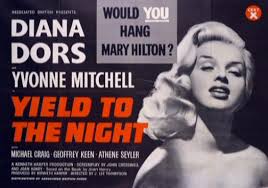
In the same year, Lee Thompson's Yield To The Night was passed uncut at 'X'. At the same time in 1956 Ruth Ellis, was the last woman to be hanged in the UK for murder, but the theme of capital punishment for women was much on the public agenda. The  Examiners expressed concerns at an early stage about how such a theme might be handled, and even before the film was scripted Arthur Watson was warning the distributor that an 'X' certificate was the most likely outcome, and only if the treatment was discreet. The distributor argued strongly for an 'A' category at the script stage and the Board's examiners considered whether there was any possibility of an 'A', but felt that parents of girls aged between 12 and 16 would not endorse such a decision. The film was passed 'X' and it remains a '15' on video.


The year 1956 also saw the resignation of Arthur Watkins, who was replaced for the next two years as Secretary by John Nichols. In 1958 John Trevelyan became Board Secretary.

The upheaval in social and class barriers that followed the war is reflected in films like Jack Clayton's Room At The Top (1958). The BBFC required the removal of 'lust' and 'bitch' from the dialogue, and also required a softening of the words used to describe the death of a female character. It was clear that Trevelyan wished to establish the 'X' category for serious adult British films - the category that had previously been used mostly for horror and continental films. However, the American League of Decency attacked the film, describing it as involving 'gross suggestiveness' and costuming, dialogue and situations. It moreover tends to arouse undue sympathy for an adulteress'. The video version is currently classified at '15'.


At the end of the decade came Beat Girl. The Board was not impressed with the script for this film about a teenage girl who seeks to rebel against her father by hanging around with a bad crowd in Soho and considers becoming a stripper. The script was judged to be 'the product of squalid and illiterate minds' and several amendments were made before it was cut for 'X'. It is now classified '12' on video, having lost its appeal to shock.

History of the BBFC: 1912-49

1916 - T. P. O’CONNOR
T. P. O’Connor was appointed President of the BBFC. He summarised the Board's Policy by listing forty-three grounds for deletion laid down for the guidance of examiners. This list was drawn from the Board’s annual reports for 1913-1915. The list shows the strictness felt necessary if the Board was to earn the trust of the public and relevant bodies.
 
1. Indecorous, ambiguous and irreverent titles and subtitles
2. Cruelty to animals
3. The irreverent treatment of sacred subjects
4. Drunken scenes carried to excess
5. Vulgar accessories in the staging
6. The modus operandi of criminals
7. Cruelty to young infants and excessive cruelty and torture to adults, especially women
8. Unnecessary exhibition of under-clothing
9. The exhibition of profuse bleeding
10. Nude figures
11. Offensive vulgarity, and impropriety in conduct and dress
12. Indecorous dancing
13. Excessively passionate love scenes
14. Bathing scenes passing the limits of propriety
15. References to controversial politics
16. Relations of capital and labour
17. Scenes tending to disparage public characters and institutions
18. Realistic horrors of warfare
19. Scenes and incidents calculated to afford information to the enemy
20. Incidents having a tendency to disparage our Allies
21. Scenes holding up the King’s uniform to contempt or ridicule
22. Subjects dealing with India, in which British Officers are seen in an odious light, and otherwise attempting to suggest the disloyalty of British Officers, Native States or bringing into disrepute British prestige in the Empire
23. The exploitation of tragic incidents of the war
24. Gruesome murders and strangulation scenes
25. Executions
26. The effects of vitriol throwing
27. The drug habit. e.g. opium, morphia, cocaine, etc
28. Subjects dealing with White Slave traffic
29. Subjects dealing with premeditated seduction of girls
30. 'First Night' scenes
31. Scenes suggestive of immorality
32. Indelicate sexual situations
33. Situations accentuating delicate marital relations
34. Men and women in bed together
35. Illicit relationships
36. Prostitution and procuration
37. Incidents indicating the actual perpetration of criminal assaults on women
38. Scenes depicting the effect of venereal disease, inherited or acquired
39. Incidents suggestive of incestuous relations
40. Themes and references relative to 'race suicide'
41. Confinements
42. Scenes laid in disorderly houses
43. Materialization of the conventional figure of Christ

THE YEARS BETWEEN THE WARS
Concerns:
  • Horror
  • Gangster films
  • Sexuality.
Some councils were beginning to bar children from films classified 'A', even when they had been cut by the BBFC to achieve a certificate. For example, the London County Council (LCC) and Manchester City Council (MCC) banned children from Frankenstein (1931), although a sequence in which the monster drowns a small girl had already been cut. In response to such material, the advisory category 'H' (for horror) was agreed in 1932, to indicate the potential unsuitability for children of the horror theme.


1948 - ARTHUR WATKINS
Arthur Watkins was appointed Secretary to the Board in 1948, under the Presidency of Sir Sidney Harris. Both men had come from the Home Office, and Watkins was also a successful playwright. Many film-makers sought the Board's advice on scripts before films went into production. Watkins and Harris formulated new terms of reference for the Board based on three principles:
• was the story, incident or dialogue likely to impair the moral standards of the public by extenuating vice or crime or depreciating moral standards?
• Was it likely to give offence to reasonably minded cinema audiences?
• What effect would it have on children?


The effect on children was of major importance since, apart from the advisory 'H' category, from which some councils already chose to bar children, there was no category that excluded children. An 'adults only' category was increasingly seen as desirable, not only to protect children, but as an extension of the freedom of film-makers to treat adult subjects in an adult fashion.

Friday, 11 March 2011

BBFC Seminar

We also had a examiner from the BBFC come in to talk to us about classification which was really useful.
Again, we've already learnt a lot about the guidelines and touched on some case studies but it was great to look at everything in more depth which helped to reinforce certain things like the main issues in classifying films.

I learnt that the BBFC would no longer classify video games, so their main focus will be on films and dvds. They have some bilingual examiners who deal with foreign films. I was suprised by how few people deal with so much material.

In class we generally think that the BBFC should move towards giving information and not just classifying films, and it seems that the BBFC also agree with this.

Wednesday, 2 March 2011

Arguments on Film Classification


Do you think the way films are regulated is sensible, useful to society and achieves its aim of protecting the vulnerable and upholding the law?
Is there anything you think could be done to improve the system?
  • The main focus should be on providing information to viewers and there should be less emphasis on just regulation.
  • Obviously regulation is important as people need a guideline and films aren't suitable for everyone but there should be less of a focus on rating and the BBFC need to work harder to make sure people (especially parents) are aware of the information provided as most aren't.

Friday, 18 February 2011

Key differences between each rating

U-PG:
  • Discrimination of an unrelatable character or in an historical/educational context is fine if disapproved of.
  • There can be an anti-drug message
  • There can be frightening sequences if in a fantasy setting (still not prolonged)
  • Still no imitable behaviour
  • No specification of mild bad language
  • No specification of occasional natural nudity
  • Sexual innuendo allowed but discreet
  • More mature themes/serious problems (eg. domestic violence) allowed but still in a mild way
  • Violence can be stronger at a PG but can’t be in detail and justified by context
  • Horror can be more frightening at a PG but cannot be prolonged and fantasy is treated less strictly
PG-12A
  • Discrimination can be more aggressive if condemned
  • 12A now allows infrequent, non-glamorised misuse of drugs
  • Horror allowed to be prolonged provided they are infrequent
  • Same rules apply to imitable behaviour
  • There can be moderate language at 12A eg. infrequent use of the 'f' word
  • Nudity doesn't have to be natural anymore and sexual nudity must be brief and discreet
  • Sexual activity can go further than implied but discreetly portrayed
  • Mature themes must be acceptable for young teens
  • Violence doesn't need to be justified by context although sexual violence is now allowed but may be implied and must have strong contextual justification
12A-15
  • Discrimination doesn't have to be condemned at a 15 but not endorse it
  • Drug use doesn't have to be infrequent and can be glamourised but the film as a whole should not endorse this
  • Strong horror and threat allowed at a 15 but not sexualised or sadistic
  • Strong language like the 'c' word allowed if justified by context and infrequent
  • No longer constraints on nudity in a sexual or educational context
  • Sex doesn't have to be brief or discreet any more
  • Theme must be suitable for 15 year olds
  • There may be detailed verbal references to sexual violence but any portrayal of sexual violence must be discreet and have a strong contextual justification.
15-18
  • Viewers are adults so completely free to choose their own entertainment
  • Illegal drug use is not allowed
  • Sexualised violence is allowed in a 18 but cannot cause potential harm to anyone or society
  • Clear images of real sex is still not permitted
18-R18
  • Work must still NOT breach laws
  • R18 films are primarily for explicit works of consenting sex or strong fetish material involving adults.
  • Only allowed in specially licenced cinemas or sex shops

R18 Rating

To be shown only in specially licensed cinemas, or supplied only in licensed sex shops, and to adults of not less than 18 years
The ‘R18’ category is a special and legally restricted classification primarily for explicit works of consenting sex or strong fetish material involving adults. Films may only be shown to adults in specially licensed cinemas, and video works may be supplied to adults only in licensed sex shops. ‘R18’ video works may not be supplied by mail order.
The following content is not acceptable:
  • any material which is in breach of the criminal law, including material judged to be obscene under the current interpretation of the Obscene Publications Act 1959
  • material (including dialogue) likely to encourage an interest in sexually abusive activity (for example, paedophilia, incest or rape) which may include adults role-playing as non-adults
  • the portrayal of any sexual activity which involves lack of consent (whether real or simulated). Any form of physical restraint which prevents participants from indicating a withdrawal of consent
  • the infliction of pain or acts which may cause lasting physical harm, whether real or (in a sexual context) simulated. Some allowance may be made for moderate, non-abusive, consensual activity
  • penetration by any object associated with violence or likely to cause physical harm
  • any sexual threats, humiliation or abuse which does not form part of a clearly consenting role-playing game. Strong physical or verbal abuse, even if consensual, is unlikely to be acceptable.
These Guidelines will be applied to the same standard regardless of sexual orientation.

18 Rating

Suitable only for adults
No-one younger than 18 may see an ‘18’ film in a cinema.
No-one younger than 18 may rent or buy an ‘18’ rated video.
In line with the consistent findings of the BBFC’s public consultations and The Human Rights Act 1998, at ‘18’ the BBFC’s guideline concerns will not normally override the principle that adults should be free to choose their own entertainment. Exceptions are most likely in the following areas:
  • where the material is in breach of the criminal law, or has been created through the commission of a criminal offence
  • where material or treatment appears to the BBFC to risk harm to individuals or, through their behaviour, to society – for example, any detailed portrayal of violent or dangerous acts, or of illegal drug use, which may cause harm to public health or morals. This may include portrayals of sexual or sexualised violence which might, for example, eroticise or endorse sexual assault
  • where there are more explicit images of sexual activity which cannot be justified by context. Such images may be appropriate in ‘R18’ works, and in ‘sex works’ (see below) would normally be confined to that category.
In the case of video works (including video games), which may be more accessible to younger viewers, intervention may be more frequent than for cinema films.

Sex education at ‘18’

Where sex material genuinely seeks to inform and educate in matters such as human sexuality, safer sex and health, explicit images of sexual activity may be permitted.

Sex works at ‘18’

Sex works are works whose primary purpose is sexual arousal or stimulation. Sex works containing only material which may be simulated are generally passed ‘18’. Sex works containing clear images of real sex, strong fetish material, sexually explicit animated images, or other very strong sexual images will be confined to the ‘R18’ category. Material which is unacceptable in a sex work at ‘R18’ is also unacceptable in a sex work at ‘18’.

15 Rating

Suitable only for 15 years and over
No one younger than 15 may see a ‘15’ film in a cinema. No one younger than 15 may rent or buy a ‘15’ rated video work.

Discrimination

The work as a whole must not endorse discriminatory language or behaviour.

Drugs

Drug taking may be shown but the film as a whole must not promote or encourage drug misuse. The misuse of easily accessible and highly dangerous substances (for example, aerosols or solvents) is unlikely to be acceptable.

Horror

Strong threat and menace are permitted unless sadistic or sexualised.

Imitable behaviour

Dangerous behaviour (for example, hanging, suicide and self-harming) should not dwell on detail which could be copied. Easily accessible weapons should not be glamorised.

Language

There may be frequent use of strong language (for example, ‘fuck’). The strongest  terms (for example, ‘cunt’) may be acceptable if justified by the context. Aggressive or repeated use of the strongest language is unlikely to be acceptable.

Nudity

Nudity may be allowed in a sexual context but without strong detail. There are no constraints on nudity in a non-sexual or educational context.

Sex

Sexual activity may be portrayed without strong detail. There may be strong verbal references to sexual behaviour, but the strongest references are unlikely  to be acceptable unless justified by context. Works whose primary purpose is sexual arousal or stimulation are unlikely to be acceptable.

Theme

No theme is prohibited, provided the treatment is appropriate for 15 year olds.

Violence

Violence may be strong but should not dwell on the infliction of pain or injury. The strongest gory images are unlikely to be acceptable. Strong sadistic or sexualised violence is also unlikely to be acceptable. There may be detailed verbal references to sexual violence but any portrayal of sexual violence must be discreet and have a strong contextual justification.

12 & 12A Ratings

Suitable for 12 years and over

Exactly the same criteria are used to classify works at ‘12A’ and ‘12’. These categories are awarded where the material is suitable, in general, only for those aged 12 and over. Works classified at these categories may upset children under 12 or contain material which many parents will find unsuitable for them.
The ‘12A’ category exists only for cinema films. No one younger than 12 may see a ‘12A’ film in a cinema unless accompanied by an adult, and films classified ‘12A’ are not recommended for a child below 12. An adult may take a younger child if, in their judgement, the film is suitable for that particular child. In such circumstances, responsibility for allowing a child under 12 to view lies with the accompanying adult.
The ‘12’ category exists only for video works. No one younger than 12 may rent or buy a ‘12’ rated video work.

Discrimination

Discriminatory language or behaviour must not be endorsed by the work as a whole. Aggressive discriminatory language or behaviour is unlikely to be acceptable unless clearly condemned.

Drugs

Any misuse of drugs must be infrequent and should not be glamorised or give instructional detail.

Horror

Moderate physical and psychological threat may be permitted, provided disturbing sequences are not frequent or sustained.

Imitable behaviour

Dangerous behaviour (for example, hanging, suicide and self-harming) should not dwell on detail which could be copied, or appear pain or harm free.  Easily accessible weapons should not be glamorised.

Language

Moderate language is allowed. The use of strong language (for example, ‘fuck’) must be infrequent.

Nudity

Nudity is allowed, but in a sexual context must be brief and discreet.

Sex

Sexual activity may be briefly and discreetly portrayed. Sex references should not go beyond what is suitable for young teenagers. Frequent crude references are unlikely to be acceptable.

Theme

Mature themes are acceptable, but their treatment must be suitable for young teenagers.

Violence

Moderate violence is allowed but should not dwell on detail. There should be no emphasis on injuries or blood, but occasional gory moments may be permitted if justified by the context. Sexual violence may only be implied or briefly and discreetly indicated, and must have a strong contextual justification.

PG Rating

Parental Guidance

General viewing, but some scenes may be unsuitable for young children

Unaccompanied children of any age may watch. A ‘PG’ film should not disturb a child aged around eight or older. However, parents are advised to consider whether the content may upset younger or more sensitive children.

Discrimination

Discriminatory language or behaviour is unlikely to be acceptable unless clearly disapproved of or in an educational or historical context.  Discrimination by a character with which children can readily identify is unlikely to be acceptable.

Drugs

References to illegal drugs or drug misuse must be innocuous or carry a suitable anti-drug message.

Horror

Frightening sequences should not be prolonged or intense. Fantasy settings may be a mitigating factor.

Imitable behaviour

No detail of potentially dangerous behaviour which young children are likely to copy. No glamorisation of realistic or easily accessible weapons.

Language

Mild bad language only.

Nudity

Natural nudity, with no sexual context.

Sex

Sexual activity may be implied, but should be discreet and infrequent. Mild sex references and innuendo only.

Theme

Where more serious issues are featured (for example, domestic violence) nothing in their treatment should condone unacceptable behaviour.

Violence

Moderate violence, without detail, may be allowed, if justified by its context (for example, history, comedy or fantasy).

U Rating


Universal – Suitable for all

It is impossible to predict what might upset any particular child. But a ‘U’ film should be suitable for audiences aged four years and over. ‘U’ films should be set within a positive moral framework and should offer reassuring counterbalances to any violence, threat or horror.
If a work is particularly suitable for a pre-school child to view alone, this will be indicated in the Consumer Advice.

Discrimination

No discriminatory language or behaviour unless clearly disapproved of.

Drugs

No references to illegal drugs or drug misuse unless they are infrequent and innocuous, or there is a clear educational purpose or anti-drug message suitable for young children.

Horror

Scary sequences should be mild, brief and unlikely to cause undue anxiety to young children. The outcome should be reassuring.

Imitable behaviour

No potentially dangerous behaviour which young children are likely to copy. No emphasis on realistic or easily accessible weapons.

Language

Infrequent use only of very mild bad language.

Nudity

Occasional natural nudity, with no sexual context.

Sex

Mild sexual behaviour (for example, kissing) and references only (for example, to ‘making love’).

Theme

While problematic themes may be present, their treatment must be sensitive and appropriate for young children.

Violence

Mild violence only. Occasional mild threat or menace only.

Thursday, 17 February 2011

13 MAIN ISSUES:

12, 13) Violence, Sexualised violence
  • The BBFC will take account of the degree and nature of violence in works.
  • Portrayal of violence as a normal solution to problems, heroes who inflict pain and injury, callousness towards victims, encouraging aggression and content which depicts characters taking pleasure in pain or humiliation will recieve more restricitve classifications.
  • Sexualised violence which glamourise violence will be cut or restricted.
  • There is a strict policy on rape within this issue. Content endorsing sexual violence may be cut.
  • Any association of sex with non-consensual restraint, pain or humiliation may be cut.

13 MAIN ISSUES:

11) Theme
  • Classification decisions will depend significantly on the treatment of a movie's theme and sensitvity of its presentation.
  • The most problematic themes (drug abuse, sexual violence, paedophilia, incetment to racial hatred or violence) are likely to have high ratings.

13 MAIN ISSUES:

9, 10). Sex, Sexual Reference
  • Portrayal of sexual activity can range from kissing and verbal references to making love to detail of real sex. This is reflected in the classification system.
  • Works which primary purpose is sexual arousal is likely to be passed only in adult categories '18'.
  • Work containing clear images of real sex, strong retish material or sexual ly explicit animated images will be confined to 'R18' which may only be supplied in licenced sex shops.

13 MAIN ISSUES:

8) Nudity
  • Natural nudity with no sexual content is acceptable
  • Nudkty with sexual content will recieve more resitrictive rating, strong detail will only be allowed in adult categories.

13 MAIN ISSUES:

7) Language
  • Expletives with a sexual, religious or racial association or language about minority groups and commonly known rude gestures may offend.
  • The extend of offence will depend on age, gender, race, background, beliefs and expectations.
  • Context should be taken note of.

13 MAIN ISSUES:

4, 5, 6) Imitable behaviour, Criminal behaviour, Weapons
  • Detailed portrayal of criminal and violent techniques and glamourisation of easily accessible weapons such as knives is classified.
  • Anti-social behaviour eg.bullying is likely to recieve a higher rating.
  • Scenes promoting illegial behaviour will be cut or rejected.
  • Portrayals of potentially dangerosu behaviour eg. hanging, suicide and self harm may be cut.